
What Is an Iron Condor?
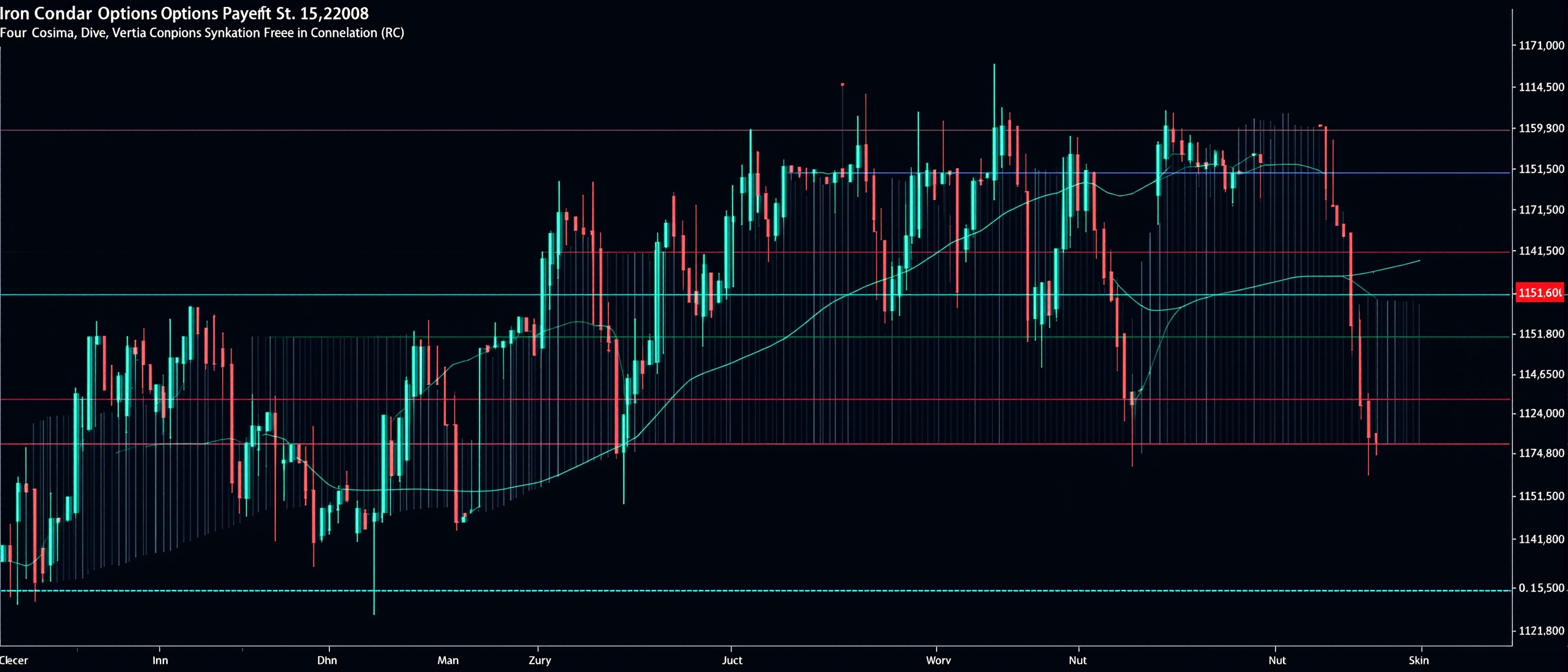
An iron condor is a 4-leg defined-risk neutral strategy that profits when the underlying stays within a price range until expiry. It combines a bear call spread + bull put spread, collecting a net credit upfront. Max profit = net credit. Max loss = spread width − net credit.
I run iron condors on BTC and ETH when the market is going sideways and implied volatility is elevated. The structure is elegant: you sell an OTM call spread above the current price and an OTM put spread below it — collecting premium from both sides. As long as BTC doesn't blast through either of your short strikes, you keep the entire credit.
This is a premium-selling strategy. You're not betting on direction — you're betting that BTC stays range-bound while time passes and IV falls. Time decay (theta) and IV compression are your two profit engines. The wings (long options) cap your max loss at a known amount, making this far safer than selling a naked strangle on volatile crypto.
Profit Source
Loss Source
Trade iron condors on Deribit — 4-leg combo orders via Strategy Builder, cash-settled BTC & ETH options
0.03% fee per leg · European style · ~90% of global BTC options OI
Affiliate link — Ron earns a commission
4-Leg Construction
Sell OTM put (B), buy further OTM put (A), sell OTM call (C), buy further OTM call (D) — all same expiry. Structure: A < B < BTC Price < C < D. Short legs B and C define your profit zone; long legs A and D cap max loss.
The iron condor's 4-leg structure is what distinguishes it from a naked strangle. The wing options (long puts and long calls at the outer strikes A and D) cost you some premium upfront but they cap your maximum loss at a known dollar amount — essential when trading BTC, which can gap 10–20% overnight.
Strike Structure — BTC at $88,000
A: $76K
Long Put (wing)
B: $81K
Short Put (inner)
BTC $88K
Current price
C: $95K
Short Call (inner)
D: $100K
Long Call (wing)
Strike A — $76,000
Wing protection on the downside. Caps loss if BTC crashes below $76K. Costs premium — reduces net credit.
Strike B — $81,000
Short put — collects premium. Defines lower boundary of profit zone. Negative delta offsets neutral thesis.
Strike C — $95,000
Short call — collects premium. Defines upper boundary of profit zone. Profits from BTC staying below $95K.
Strike D — $100,000
Wing protection on the upside. Caps loss if BTC rips above $100K. Costs premium — reduces net credit.
Strike selection rule: I target the 15–20 delta strikes for my short legs. At 15 delta, each short strike has roughly 85% probability of expiring OTM. The further OTM you go for strike selection, the less credit you collect — but the wider your profit range. I balance at 15–20 delta for a practical credit-to-probability ratio.
Formulas and BTC Example
Max profit = net credit (all 4 legs expire worthless). Max loss = spread width − net credit. Two breakeven points: upper at short call + credit; lower at short put − credit. All four numbers are locked in at entry.
Core Formulas
BTC Example — $88K Spot Price
Call Spread (Bear Call)
Sell $95K Call
Short call — inner wing
+$900
Buy $100K Call
Long call — wing protection
−$300
Put Spread (Bull Put)
Sell $81K Put
Short put — inner wing
+$900
Buy $76K Put
Long put — wing protection
−$300
Net Credit
+$1,500
($900+$900)−($300+$300)
Max Loss
−$3,500
$5,000 − $1,500
Upper B/E
$96,500
$95K + $1,500
Lower B/E
$79,500
$81K − $1,500
Spread width = $5,000 per side (e.g., $95K − $100K call spread)
P&L at Expiry — BTC Iron Condor $76K/$81K/$95K/$100K (Net Credit $1,500)
| BTC Price at Expiry | P&L | Notes |
|---|---|---|
| Below $76K | −$3,500 | Max loss — BTC breaches the long put wing ($76K) |
| $76,000 | −$3,500 | Max loss — at long put strike at expiry |
| $79,500 | $0 | Lower breakeven: $81K short put − $1,500 credit |
| $81,000 | +$1,500 | Max profit — BTC at short put strike (OTM) |
| $88,000 | +$1,500 | Max profit zone — BTC stays between $81K and $95K |
| $95,000 | +$1,500 | Max profit — BTC at short call strike (OTM) |
| $96,500 | $0 | Upper breakeven: $95K short call + $1,500 credit |
| Above $100K | −$3,500 | Max loss — BTC breaches the long call wing ($100K) |
Profit zone width: In this example, BTC can trade anywhere between $79,500 and $96,500 — a $17,000 range — and the condor profits. That's a ±$8,500 buffer from $88K spot. In volatile crypto markets, that may not feel wide, which is exactly why entry timing (IV high, catalyst-free window) and trade management rules matter so much.
Greeks
Iron condors are short vega, positive theta, near delta-neutral at entry — they profit from time passing and IV falling. These are the key Greek dynamics to understand.
The iron condor's Greeks are what make it a premium-seller's weapon. You enter delta-neutral, collect theta every day, and benefit when IV mean-reverts lower. Understanding how each Greek behaves across the trade life cycle is what separates profitable condor traders from those who get wiped.
Delta (Δ)
~0 at entry — delta neutral
At entry with BTC centered between the short strikes, your net delta is close to zero. The positive delta from the bull put spread offsets the negative delta from the bear call spread. As BTC moves toward either short strike, delta shifts — toward C (short call) the position becomes increasingly short delta, toward B (short put) it becomes long delta. This delta shift is a warning sign to manage or exit.
Theta (Θ)
+$0.05 to +$0.15/day — time decay is your friend
Theta is your biggest ally in an iron condor. Every day BTC stays range-bound, the short legs decay toward zero while the long wing options decay more slowly (they have lower vega and gamma). Net theta is positive — roughly $50–$150 per day on a standard BTC condor depending on DTE and strikes. Theta accelerates in the final 30 days, which is both an opportunity (faster decay) and a risk (gamma amplifies P&L swings).
Vega (V)
Negative (short vega) — enter when IV is elevated
Iron condors are short vega — you benefit when IV falls after your entry. This is why I specifically enter condors when Deribit Volatility Index (DVOL) is above its 30-day average, or when IV Rank is above 50. If you enter with DVOL at 55% and it falls to 40% over two weeks with BTC flat, your short vega position profits even before expiry. Conversely, an IV spike (from a macro shock or sudden BTC move) bleeds the position through vega even if BTC is still within the profit zone.
Gamma (Γ)
Negative — large BTC moves and <21 DTE are dangerous
Gamma is negative on a short iron condor. Negative gamma means your delta position changes against you as BTC moves: toward the short call, you get shorter faster; toward the short put, you get longer faster. Under 21 DTE, gamma accelerates dramatically — small BTC moves cause outsized P&L swings. This is why the 21 DTE exit rule is so critical. Don't hold condors into expiry week; the gamma risk is rarely worth the remaining theta you collect.
When to Use an Iron Condor
Use an iron condor when BTC is range-bound, IV is high relative to history (IV Rank >50), no major catalyst is expected within the trade window, and you have 30–45 DTE. Avoid in trending markets and pre-event environments.
Ideal Conditions
IV Rank >50
Selling premium when it's expensive is the edge. IV Rank above 50 means options are pricier than usual — you collect more credit for the same strikes.
30–45 DTE
Theta works best in this window. Not too close (gamma risk) and not too far (credit is thin relative to time held).
No known catalyst in window
Earnings, Fed meetings, CPI prints, ETF approvals — any scheduled event can spike IV and move BTC violently. Avoid these windows.
BTC in a defined trading range
Look for BTC consolidating under resistance and above support for 1–2 weeks before entry. The range sets your strike candidates.
Avoid When
Trending market
BTC in a clear trend (up or down) will run through your short strikes. Condors need range-bound price action, not trending.
Pre-FOMC/CPI/ETF event
These events spike IV before they happen and then IV crushes after — but BTC also typically moves 8–15%+ on the event itself.
IV already low (IV Rank <30)
Selling cheap premium is poor risk/reward. The credit is too thin relative to the potential max loss.
BTC DVOL above 80%
Extreme IV means BTC is in stress. High IV tends to stay high or spike higher. Entering condors here means short-vol into chaos.
Real Trade Setup — BTC at $88K, April 2026
Trade Management Rules
Close at 50% of max profit. Stop loss at 1.5–2x credit received. Exit by 21 DTE regardless. Adjust by rolling the untested side closer for more credit — or roll the tested side out in time.
Trade management separates condor traders who compound small wins over time from those who hold to expiry and get crushed by gamma. These three rules are non-negotiable in my playbook.
50% Profit Target
When the condor has lost half its value (meaning you can buy it back for half the original credit), close it. On a $1,500 credit iron condor, close when you can buy it back for $750 — capturing $750 profit. Research and backtests consistently show that 50% profit take maximizes expected value by freeing capital for the next trade rather than holding to expiry for the final $750.
2x Stop Loss
If the condor costs 2x–2.5x the original credit to close, exit. On a $1,500 credit, exit when the condor costs $3,000–$3,750 to close — locking in a $1,500–$2,250 loss. This protects against the runaway loss scenario where BTC trends through your short strike and you hold hoping for reversal. Stubbornly holding a tested condor is one of the most common mistakes I see.
21 DTE Time Exit
Under 21 DTE, gamma risk explodes. The final 21 days of a condor's life contain roughly 30–40% of the remaining theta but disproportionately more gamma risk. A 3–5% BTC move in the final 2 weeks near a short strike can flip a winning trade into max loss territory in hours. The theta you collect in the final 21 days rarely justifies the gamma exposure. Close at 21 DTE as a hard rule.
Adjustment Tactics
Roll Untested Side In
If BTC moves toward the call side (C) and the put spread is far OTM (untested), roll the put short strike closer to current price to collect additional credit. Reduces max profit zone width but adds more premium to offset potential loss on the call side.
Roll Tested Side Out in Time
If one short strike is being tested, you can roll the entire tested spread to a later expiry for a credit. This buys more time but increases DTE exposure. I only do this if IV has spiked (making the roll credit meaningful) and the macro outlook still supports range-bound price action.
How to Place an Iron Condor on Deribit
On Deribit, use the Strategy Builder to enter all 4 legs as a single combo order. Never leg into an iron condor one option at a time — use the combo to control execution price and net credit.
Deribit is the only platform I use for BTC and ETH iron condors. The depth of OI on all strikes — especially at the 15–25 delta range where I sell — makes for tight spreads and reliable fills. The Strategy Builder handles all 4 legs as a single order so you don't get stuck with partial fills or leg-in risk.
Open Strategy Builder
Deribit → BTC Options (or ETH Options) → click "Strategy Builder" in the top menu. Select your target expiry from the calendar.
Add the call spread legs
Find Strike C ($95,000). Click "Sell Call." Then find Strike D ($100,000). Click "Buy Call." Both appear in your combo legs panel. This is your bear call spread.
Add the put spread legs
Find Strike B ($81,000). Click "Sell Put." Then find Strike A ($76,000). Click "Buy Put." The platform now shows all 4 legs and calculates net credit automatically.
Review net credit and submit
Verify the net credit shown matches your target (e.g., $1,500). Set limit order for the combo. Submit. All 4 legs fill simultaneously at the net credit price.
Style
European
No early exercise. Close early by reversing all 4 legs via Strategy Builder combo order.
Settlement
Cash-settled (BTC)
P&L settled in BTC at expiry vs Deribit index. No physical delivery.
Fees
0.03% × 4 legs
Capped at 12.5% of premium per leg. 4-leg condor = 4 fee events on open + 4 on close.
Closing early: To close the condor before expiry, use the Strategy Builder to reverse all 4 legs: buy back both short options (B and C) and sell both long options (A and D) as one combo. This ensures you close at the net debit price rather than legging out and risking slippage on each individual option.
Trade iron condors on Deribit — 4-leg combo orders, live IV quotes per strike, deepest BTC options OI
$12B+ daily BTC options volume · Portfolio margin · European cash-settled · 0.03% per leg
Affiliate link — Ron earns a commission at no cost to you
Iron Condor vs Strangle
An iron condor adds defined-risk wings to a strangle — you collect less credit but your max loss is capped. On crypto, never trade a naked strangle on BTC. 20–50% intraday moves happen.
The naked strangle sells the same OTM call and OTM put as the inner legs of an iron condor, but without the protective wings. It collects more premium — but with unlimited loss on both sides. In equities, some professional traders run strangles. In crypto, a naked strangle on BTC is an account-wiper waiting to happen. I've seen DVOL go from 55% to 120% overnight. That's why I only trade the iron condor version in crypto.
| Aspect | Iron Condor | Naked Strangle |
|---|---|---|
| Max Loss | ★Capped: spread width − net credit | Unlimited on both sides — catastrophic in crypto |
| Credit Received | Lower — wings reduce the net premium | ★Higher — no wings to reduce premium |
| Margin Required | ★Lower — defined risk reduces margin | Very high — undefined risk requires large margin |
| Risk Profile | ★Defined — max loss known at entry | Undefined — a single 30% BTC move = account wipe |
| IV Crush Benefit | Yes — short vega profits as IV falls | ★Yes — even more vega exposure, bigger IV benefit |
| Crypto Suitability | ★✅ Suitable — wings protect against BTC gaps | ❌ Dangerous — naked strangles on BTC are reckless |
Crypto Rule: Never Trade Naked Strangles on BTC
BTC has had multiple 20–50% intraday moves in its history. In March 2020, BTC dropped 50% in 24 hours. In November 2022, it fell 25% in days. A naked strangle in those scenarios means the short put goes from OTM to deeply ITM in hours — the loss is catastrophic and unlimited. The iron condor's wings are not optional in crypto. They are mandatory.
Risks of an Iron Condor
Max loss is capped at spread width − net credit (in our example: $3,500). But if BTC moves strongly in one direction, the condor can go from full profit to max loss within days. Gamma and vega spikes near expiry are the primary risks.
BTC big directional move → tested short strike, potentially max loss
If BTC rips from $88K to $97K, the short $95K call goes ITM. The position P&L moves from +$1,500 toward −$3,500 as BTC approaches and passes $95K. At $96,500+ you're past the upper breakeven and losing real money. This is the primary risk — BTC ignoring your range thesis.
IV spike → short vega bleeds mid-trade
A sudden macro shock (exchange hack, regulatory ban, macro panic) can spike BTC's DVOL from 60% to 90% overnight. As a short vega position, the condor loses significant value even if BTC barely moves. The short options reprice higher while your long wings don't gain proportionally. A bad IV spike can turn a winning condor into a loss before expiry.
Gamma under 21 DTE → rapid P&L swings near short strikes
Holding an iron condor into expiry week means exponentially higher gamma. A 2–3% BTC daily move that was manageable at 35 DTE can cause 5–10x larger P&L swings at 7 DTE. The condor that was +$800 at 25 DTE can reach max loss at 5 DTE on a single bad daily candle. This is why the 21 DTE exit rule exists.
Frequently Asked Questions
Trade iron condors on the deepest BTC options market
Deribit holds ~90% of global BTC options OI. The Strategy Builder lets you place all 4 legs of an iron condor as a single combo order — no leg risk, no partial fills. Cash-settled, European style, with live IV quotes on every strike. If you're serious about premium selling in crypto, Deribit is the right venue.
Affiliate links — Ron earns a commission at no cost to you
Risk Disclaimer — Crypto options trading involves substantial risk of loss. Iron condor strategies described in this article are based on personal trading experience and do not constitute financial advice. Most crypto options expire out-of-the-money. BTC can move 20–50% in hours — risk only capital you can afford to lose entirely. Ron Nguyen, April 2026.