
Why Psychology Matters More in Derivatives
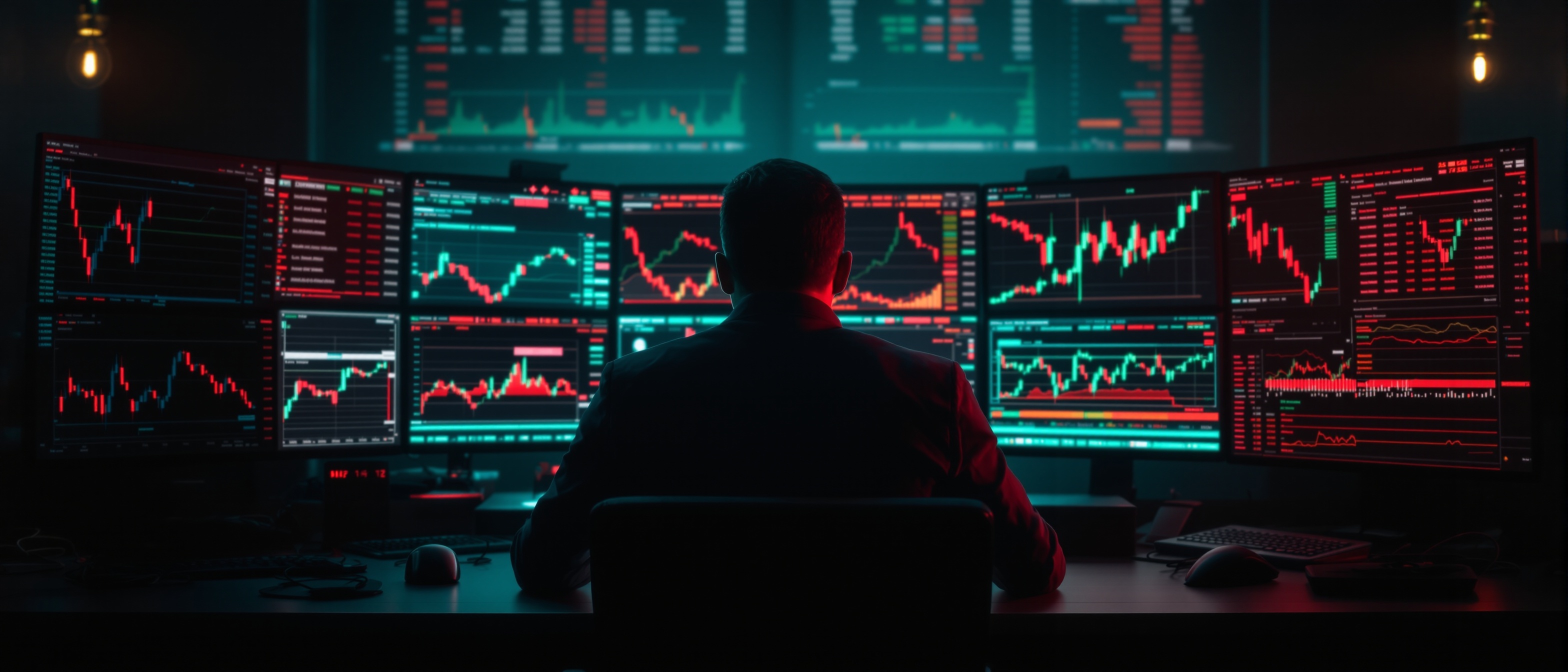
Leverage amplifies both price moves and emotional mistakes. A 5% Bitcoin move is inconvenient on a spot position. At 20x leverage, that same move is a liquidation. What makes derivatives dangerous is not the math — the math is simple. What makes them dangerous is that the emotional stakes are 20x higher, and the human brain makes predictably worse decisions under high emotional stakes.
I was liquidated three times. Every single one was emotional, not technical. First blowup in 2020: 25x long ETH, no stop, one tweet from a prominent account about SEC action wiped $8,000 in eleven minutes. I froze. I watched it happen. I told myself it would recover. It didn't. The thesis was fine — the position size and absence of a stop were the killers. That's a psychology failure, not an analysis failure.
100x
Leverage: a 1% adverse move liquidates the entire position. Bitcoin moves 1% in under 10 minutes regularly
90%+
Of liquidations at 20x+ leverage are attributed to emotional decision-making, not bad analysis (CoinGlass data)
24/7
Crypto never closes. The relentless opportunity cost creates fatigue and impulsive trading that equity markets don't
Build the habit on Bybit — best derivatives UX in 2026
Liquidation price shown before entry · 20K USDT demo account · Use RONONCRYPTO for bonus
Affiliate link — Ron earns a commission
Pre-Commit Your Plan Before Entry
Write entry, stop, target, and size before opening the position — you cannot think clearly once money is at risk.
I made this rule after a trade in late 2021 where I opened a 15x long on ETH "just to see what happens" — no stop, no target, no size logic. I held it for four hours improvising the whole way. I got lucky that time. The next three times I did the same thing, I didn't.
Pre-commitment works because it removes the emotional brain from the decision loop. When the market is moving and your position is live, the same brain regions that process physical threat get activated. You cannot think straight. The written plan written in calm — before entry — is your only rational voice in those moments.
The rule is simple: before every trade, write down (or type into your journal) your entry price range, stop-loss level, take-profit target, and position size. Set the stop and TP immediately after the fill. Never open a position without all four defined. No mid-trade changes to the plan.
Written plans outperform purely discretionary trading on return metrics
Source: Dukascopy Bank trading research
Risk 1% Per Trade, Max
Never risk more than 1% of account equity on a single derivatives trade — this is the foundation of account survival.
The 1% rule isn't a soft guideline — it's load-bearing. At 1% risk per trade with a 50% win rate, you can lose 20 trades in a row and still be down only 18% of your account. You survive. At 10% risk per trade, 20 losses wipes you to zero and you're done.
More importantly, small size creates clear thinking. When I'm risking $50 on a trade, I can execute the plan without emotion because the loss doesn't matter. When I'm risking $2,000, the noise in my head is deafening. The 1% rule isn't just math — it's a psychology tool.
The formula: position size = (account equity × risk %) ÷ (entry − stop). On a $10,000 account with a stop 2% away from entry: max loss = $100, effective size = $5,000 at 1x (or $500 at 10x leverage). Use a position size calculator every single time.
Example — $10K Account
Accept the Loss When It Triggers
A hit stop is information, not failure — close the position, reset emotionally, and move on without revenge-doubling.
My second liquidation in 2022 was pure stop-moving. I was long Luna at $35 — reasonable thesis, reasonable setup. The stop was at $29. When it touched $30, I told myself "it's just testing support" and moved the stop to $22. It touched $22. I moved it to $12. Then to $8. Then to $2. Then to zero.
I watched $4,000 go to zero over 72 hours because I couldn't accept that the trade was wrong. Each stop-move was a small emotional decision that felt rational in isolation. Collectively they were catastrophic.
The solution is mechanical acceptance: the stop is the point at which the trade thesis is invalidated. A stopped trade is not a loss — it is the cost of testing whether a thesis was correct. Professional traders budget for losses exactly the same way a business budgets for operating expenses. Accept it. Book it. Move on.
Average realised loss size vs planned stop when traders refuse to accept the loss
Source: PFH Markets trading behavior data
Stop Revenge Trading After a Loss
Close the platform for 30 minutes after any stopped trade — revenge setups cause most account blowups.
Revenge trading is the most predictable pattern in retail derivatives. You get stopped out. Your brain registers it as a threat — not just financial, but identity-level. "I was wrong. I need to be right." You open a bigger trade immediately, often in the same direction, to "get it back."
I went through this cycle dozens of times in 2020–2021. The pattern was always: normal loss → revenge trade 3x bigger → bigger loss → panic close → shame spiral → avoid trading for a week. The revenge trade almost never worked. I was emotionally activated, the setup quality was zero, and the size was too big.
The 30-minute rule breaks the loop. Close the app. Walk away. Do anything else. The urgency you feel to immediately re-enter is not real market insight — it is cortisol. After 30 minutes, the emotional activation drops enough to think clearly. Ask yourself: would I take this trade if I hadn't just been stopped? If the answer is no, don't take it.
Of revenge trades in my journal were losers — compared to 47% win rate on non-revenge trades
Source: Ron's personal trading journal, 2021–2023
Journal Every Trade
Log entry, exit, emotion, and reason for every trade — patterns only become visible on paper, not in memory.
The journal is where the 1% rule lives or dies. You can believe you're following the rules while systematically breaking them — until you look at the data. My journal showed I was losing 80% of trades entered within 30 minutes of a stopped trade. That single insight changed my entire risk management approach.
Every trade log entry needs: date/time, asset, direction, entry price, stop price, target, actual exit, P&L, setup type, and an emotion field (calm / FOMO / revenge / bored / confident). The emotion field is the most important. Patterns by emotion tell you more about your edge than almost any technical analysis.
Do a weekly review on Sunday. Look for: which setups have positive expectancy, which emotional states correlate with winning vs losing, whether you're following the pre-trade checklist. Most traders who journal for 3 months transform their results — not because the market changed, but because they can finally see themselves clearly.
Minimum Journal Fields
Step Away From the Screen
Walk away 10 minutes if you feel urgency, FOMO, or adrenaline — the market will still be there when you return.
Crypto trades 24/7 — 365 days, no breaks, no closing bell. This creates a unique psychological pressure that equity or forex traders don't face. There is always something moving. There is always a setup forming. The FOMO is relentless because the opportunity cost of not trading is always present.
This pressure accumulates. After 4–6 hours at a screen, decision quality degrades sharply even if you don't feel tired. The 24/7 nature of crypto means you can always rationalize one more trade. The best traders I know treat their screen time like a professional sport — structured sessions, mandatory breaks, hard stops.
The 10-minute rule is simple: if you feel urgency, adrenaline, FOMO, or "I have to get in now" — that is your signal to step away, not to enter. Do 6 slow breaths (4 seconds in, hold 4, out 6). Walk away from the screen. If the setup is still valid in 10 minutes, enter. Most urgency-driven impulses dissolve within 3 minutes.
Crypto market hours amplify emotional trading pressure vs traditional 8-hour market sessions
Source: Outlook India — Crypto Trader Psychology Study
Focus on Process, Not P&L
Judge trades by whether you followed the plan, not by outcome — good process produces profit over large sample sizes.
The outcome of any single trade is heavily influenced by random variance. A perfect setup executed perfectly can lose. A sloppy, emotional, revenge trade can win. If you reward yourself for winning and punish yourself for losing regardless of execution quality, you will inevitably reinforce bad behavior and punish good behavior.
The metric that matters is: "Did I follow the plan?" A trade where you followed every rule and lost is a good trade. A trade where you broke three rules and won is a bad trade — it just got rewarded by randomness this time. Track your process metrics (% of trades following all rules) alongside your P&L. The process score should lead the P&L by 4–8 weeks.
Consistently profitable traders focus almost entirely on rule adherence in the short term, trusting that positive expectancy over a large sample size will produce positive P&L. They are playing probability over hundreds of trades, not trying to win each individual one.
Is the primary focus metric of consistently profitable traders — not win rate or P&L
Source: ACY Securities trading psychology research
Common Psychology Mistakes That Blow Accounts
Five killers — and the exact mental fix for each.
Overleveraging
The kill: Using 50x–100x on medium-confidence setups because the potential gain looks huge
Fix: Cap leverage at 10x for any trade. Use the 1% rule — if the stop requires tiny size, the leverage is already set for you
No Stop-Loss
The kill: Opening a position without a defined stop — "I'll close it if it goes against me"
Fix: Set the stop before entry. Non-negotiable. A position without a stop is not a trade, it's a gamble
Revenge Trading
The kill: Re-entering immediately after a loss with larger size to "get it back"
Fix: 30-minute hard rule after every stopped trade. Close the app. Walk away. Come back with data, not emotion
Moving Stops
The kill: Widening the stop as the price approaches it to "give it more room"
Fix: Stops are based on the invalidation point of the thesis, not your emotional tolerance for pain
Chasing Pumps
The kill: Buying into rapid moves because you're afraid of missing out on further gains
Fix: Late entries in parabolic moves have asymmetric downside. Wait for the retrace. If it doesn't come, let it go
Try Bybit — discipline tools built in (stop + TP set at order entry)
Liquidation price shown before you confirm · No revenge trading on demo · Use RONONCRYPTO
Affiliate link — Ron earns a commission
How Fear and Greed Show in Behavior
Fear exits winners early and freezes on losers. Greed oversizes and holds past the target. Learn to recognise the four behavioral signatures before they cost you an account.
"Lock in profits" while the position has plenty of room to run — leaving 70% of the profit on the table
"It will come back" — holds a losing trade far past the stop level, turning a planned small loss into a large one
"I'm on fire" — doubles or triples size after 3–4 wins, creating outsized exposure that one loss wipes
"It's still running" — repeatedly moves the take-profit up as the trade profits, often holding all the way to reversal
Fear & Greed Index — Contrarian Signal
When the Crypto Fear & Greed Index reads below 20 (extreme fear) or above 80 (extreme greed), these levels historically mark significant market reversals. Extreme fear is often a buying signal; extreme greed is often a warning to reduce or hedge exposure. Source: Coin Bureau analysis.
Building a Pre-Trade Checklist
A 5-item checklist removes 90% of impulsive entries. Takes 60 seconds. Do it before every trade.
5-Point Pre-Trade Checklist
Stop-loss level defined and set in the exchange?
Position size is ≤1% of account equity at risk?
Am I calm — no FOMO, no adrenaline, no urgency?
Is this a setup I would take without any recent P&L context?
Take-profit level placed immediately after fill?
All 5 ✓? Enter. Any ✗? Wait. Most impulsive entries fail question 3 or 4.
Frequently Asked Questions
Ready to trade with discipline?
Bybit shows your liquidation price before entry, lets you set stop + TP at the order stage, and has a 20,000 USDT demo account to practice the 7 rules risk-free.
Open Bybit AccountAffiliate link — Ron earns a commission at no cost to you
Risk Disclaimer — Crypto derivatives trading involves substantial risk of loss. The rules in this article are based on personal trading experience and do not constitute financial advice. I have been liquidated three times — past experience does not guarantee future results. Only trade with funds you can afford to lose completely. Ron Nguyen, April 2026.