
What Is Last Price?
Last price is the price of the most recently executed trade in the futures order book — the simplest, most intuitive price on any exchange.
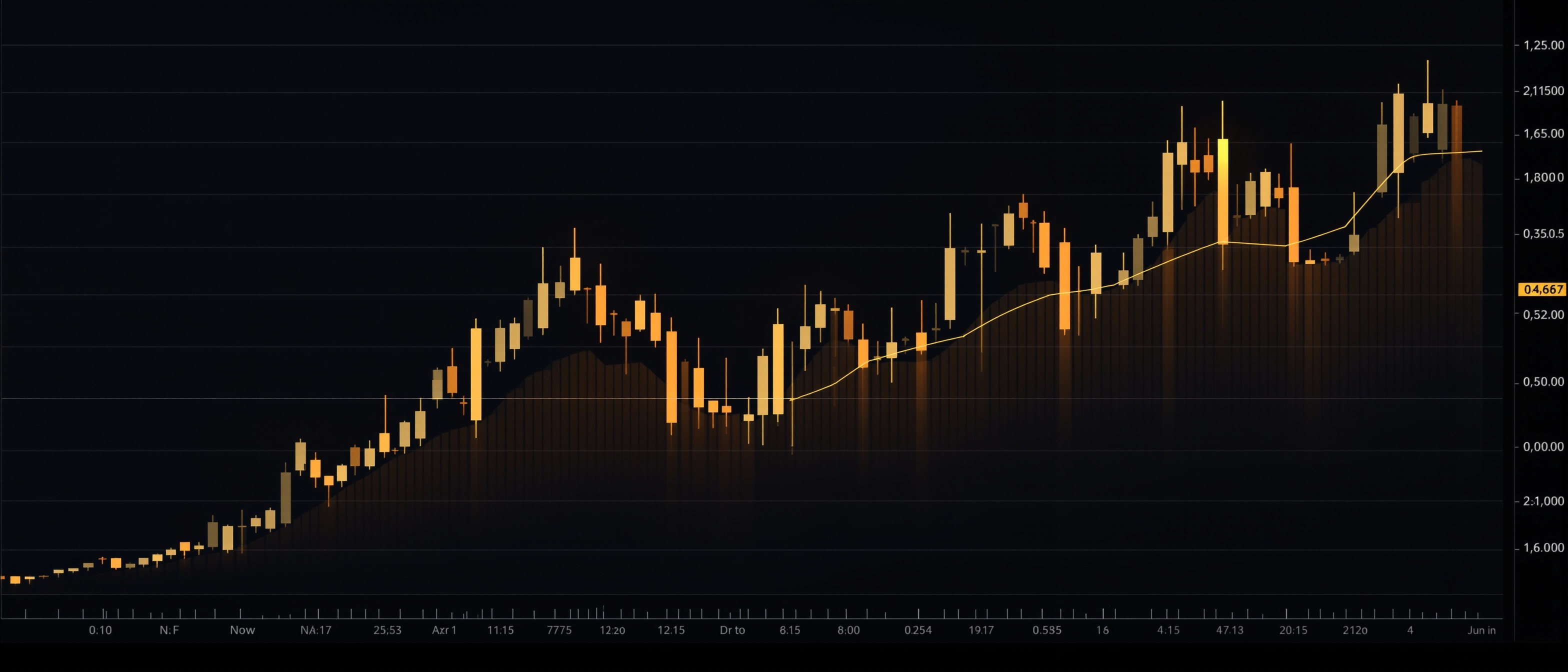
When you look at a BTC/USDT perpetual chart on Bybit or Binance, the price displayed in large text at the top — the one that moves tick by tick as trades execute — is the last price. Every candlestick is built entirely from last prices: each open, high, low, and close represents actual executed trades.
Last price is what you use for reading charts, spotting support and resistance, identifying patterns, and executing trades. Every technical analysis technique you've learned operates on last price data. It's the foundation of how price action works.
0.5–3%
Gap between last price and mark price during volatile events. In calm markets this is 0.1–0.2%.
5–10%
Last price wick size possible on thin books during a large single market order. Mark price barely moves.
Charts only
Use last price for reading charts, technical analysis, entries, and take-profits — not for stops or liquidation monitoring.
Real trades
Every trade executed on the futures exchange directly moves last price. No smoothing or averaging — raw trade data.
What Is Mark Price?
Mark price is the fair value of a futures contract calculated from the underlying spot index — not from the futures order book. It's what exchanges use for liquidations, unrealised PnL, and margin calculations.
Every major futures exchange — Bybit, Binance, OKX, Deribit — calculates a mark price that runs parallel to the last price. While last price updates with every trade in the futures book, mark price is derived from a combination of the spot index price, funding rate adjustments, and sometimes a moving average of the futures premium. The exact formula differs by exchange (covered in the formulas section below).
I've been trading on Deribit and Bybit since 2020 and the distinction between these two prices has saved my positions multiple times. The most important rule: your liquidation price is always calculated using mark price, never last price. Understanding this is non-negotiable for futures traders.
Mark Price vs Last Price — What They Drive
Mark Price Drives
Last Price Drives
Trade on Bybit — shows mark price and last price side by side. Toggle TP/SL between both.
400+ perpetuals · 0.020% maker fee · Mark price liquidation protection
Affiliate link — Ron earns a commission
What Is Index Price?
Index price is the volume-weighted average spot price of BTC (or ETH) across multiple approved exchanges — the anchor that mark price is built from.
Bybit and Binance use a composite index calculated from the spot prices of 5–8 major exchanges, typically including Coinbase, Kraken, Bitstamp, and a few others. Each constituent exchange is weighted by trading volume, and the calculation includes outlier removal — if one exchange's price deviates significantly from the others, its weight is reduced or removed entirely.
This multi-exchange structure is the key protection. Because the index aggregates across multiple independent liquidity pools, a trader cannot manipulate it by placing large orders on a single exchange. To move the Bybit index price, you'd need to simultaneously move BTC spot prices on Coinbase, Kraken, Bitstamp, and multiple others — economically infeasible for all but the largest sovereign actors.
Index Price Architecture
Spot prices collected from multiple exchanges
Coinbase, Kraken, Bitstamp, Bitfinex, and others feed real-time BTC/USD spot prices to the exchange's index calculator.
Outlier removal and volume weighting
Prices deviating >X% from the median are excluded or reduced in weight. Remaining prices are weighted by each exchange's volume contribution.
Index price calculated and published
The volume-weighted average is computed, published in real-time, and fed into the mark price formula. Updated every second or continuously.
Why Liquidation Uses Mark Price
Exchanges use mark price for liquidations because last price can be moved by a single large order — and using last price created a manipulable attack vector that caused mass cascade liquidations before mark price was introduced.
Before major exchanges adopted mark price for liquidations, the attack was simple: find a coin with thin futures order book liquidity, build a large short position, then execute a massive market sell order that crashes last price 5–10% — triggering a cascade of long liquidations that further push last price down, enabling you to cover your short at a significant profit. This was a known exploit.
Mark price breaks this attack entirely. A large sell order on the futures book can move last price dramatically, but mark price — anchored to the spot index across multiple independent exchanges — will barely flinch. In the same event where last price wicked to a 7% lower level, mark price might only move 0.2–0.4%. Liquidation engines watching mark price would not fire, and no cascade occurs.
5–10%
Last price wick possible from single large market sell on thin books
0.1–0.5%
Mark price movement in the same event — anchored to multi-exchange spot index
Never
Last price triggers liquidation on Bybit, Binance, OKX, and Deribit — always mark price
The Historical Problem: Pre-Mark Price Liquidation Cascades
In 2018–2019, several smaller exchanges using last price for liquidations experienced intentional manipulation: a whale would short the contract, then execute a large market order to crash last price, triggering a cascade of long liquidations that further depressed the price. The whale covers the short at the bottom for massive profit. The BitMEX insurance fund was repeatedly drained by these events. Mark price adoption across Binance Futures (2019), Bybit (2019), and FTX (2019) effectively ended this attack vector for liquid pairs.
Mark Price Formulas — Bybit, Binance, Deribit
All three exchanges anchor mark price to the spot index, but use different smoothing methods to prevent sudden spikes from prematurely triggering liquidations.
The core principle is the same across Bybit, Binance, and Deribit: mark price should reflect where BTC is trading in the spot market, adjusted for the futures basis (the premium or discount the contract trades at relative to spot). The differences are in how they smooth that adjustment and prevent individual inputs from dominating.
Bybit
Every secondMedian(Price1, Price2, Last Price) Price1 = Index × [1 + Funding Rate × (Time Remaining / 8h)] Price2 = Index + Moving Average of premium
Anchor: Spot index (multi-exchange VWAP)
Median function prevents a single input from dominating the mark price calculation.
Binance
Every secondMedian(Funding Rate-adjusted Index, Index + MA premium, Contract price)
Anchor: Composite index from 5–8 approved spot exchanges
Contract price weighted to prevent mark from diverging too far from actual trades.
Deribit
ContinuousIndex Price + EMA-smoothed futures premium
Anchor: Deribit Index: volume-weighted BTC/USD across approved exchanges
EMA smoothing reduces mark price responsiveness to sudden premium spikes.
Why Does the Formula Include Funding Rate?
Perpetual futures have no expiry, so the mark price needs to account for the cost of carrying the position. The funding-rate-adjusted index represents what the futures contract "should" be worth given the current funding environment. During periods of high positive funding (longs paying shorts), this adjustment slightly reduces the mark price below spot index — accurately reflecting the cost already priced into the contract.
When Each Price Matters
Use last price for entries and chart reading. Use mark price for stop-losses, PnL tracking, and liquidation risk monitoring. The choice of which price triggers your TP/SL can mean the difference between a filled order and a false exit.
Bybit lets you toggle between mark price and last price triggers for every TP/SL order individually — a feature I consider genuinely valuable. When I set a stop-loss, I always use mark price. When I set a take-profit, last price is fine. On Binance, the same choice exists in the order configuration. On Deribit, mark price is the default for all margining operations.
Last Price
Use for:
Avoid for:
Mark Price
Use for:
Avoid for:
Bybit TP/SL Price Toggle — How to Use It
On Bybit, when setting TP/SL on an open position, you'll see a dropdown next to each price field labelled "Trigger By". Options are Last Price or Mark Price. Ron's recommendation: set Stop-Loss trigger to Mark Price — prevents wick-triggered stops. Set Take-Profit trigger to Last Price — ensures your TP fills when the actual trade price reaches your target.
Set your TP/SL on Bybit — choose mark price for stops, last price for take-profits per order
VARA-licensed · $500M+ insurance fund · Mark price engine updated every second
Affiliate link — Ron earns a commission
Real Example — How a Wick Can Trick You
During a 2024 flash crash, BTC last price wicked to $78K while mark price held at $84K. Traders with last price stops at $80K were stopped out unnecessarily — BTC was back above $83K within 4 minutes.
This scenario is not unusual. It happens several times per year across major crypto assets: a large market sell order hits a relatively thin order book, last price drops sharply (the "wick"), then market makers refill the book and last price snaps back. The entire event lasts 30 seconds to 4 minutes. Mark price barely moves throughout.
Traders with last price stops at $80K were stopped out at a significant loss. Their position was then closed by the exchange at the next available price — which might be $79.5K or $80.5K depending on slippage. Then BTC recovered to $84K within minutes. They lost real money on a move that mark price — and every spot exchange — barely registered. This is the wick trap, and it's entirely avoidable.
Flash Crash Scenario: BTC Wick Event (2024 Example)
Calm Market Basis
~0.1%
During normal trading, last price and mark price are within 0.1% of each other. The difference is negligible.
Volatile Market Basis
1–3% for seconds to minutes
During flash crashes, the gap widens briefly. Mark price stops stay calm; last price stops are vulnerable.
Pros and Cons: Mark Price vs Last Price
Mark Price Pros
Manipulation-resistant
Anchored to volume-weighted spot prices across 5–8+ exchanges. A single large order on Bybit cannot move it.
Protects against wick-triggered stops
Last price can wick 5–10% and snap back in under a minute. Mark price typically moves only 0.1–0.5% in the same event.
Fair liquidations
Liquidation at mark price means you're only closed out when the broader market genuinely agrees BTC is at a lower level.
Accurate unrealised PnL
Mark price-based PnL gives a more realistic read of what your position is actually worth at any given moment.
Mark Price Cons
Can diverge in extreme dislocations
During exchange outages or major de-pegging events, the index can briefly misrepresent fair value if multiple exchanges are affected.
Unfamiliar to spot traders
Spot traders are used to paying last price. The mark price concept requires an adjustment period to internalize properly.
PnL can look different from what you expect
If last price and mark price diverge, your displayed PnL may differ significantly from what you'd actually get on exit.
Last Price Pros
Real-time trade data
Reflects actual executed trades — the most current read of where buyers and sellers are meeting.
Useful for scalping and entries
When entering or exiting, last price is what you pay. Chart reading, pattern trading, and scalping all use last price.
Accurate for take-profits
If your take-profit triggers on last price, you know BTC actually traded at that level in the futures market.
Last Price Cons
Wicks easily on thin books
A single large market sell can move last price 5–10% on a thin order book while mark price stays calm.
Unreliable for risk management
Setting liquidation or stop-loss triggers on last price exposes you to false exits on short-duration spikes.
Manipulable by large players
Before mark price adoption, exchanges used last price for liquidations — creating a simple manipulation: sell large → cascade liquidations → profit.
Frequently Asked Questions
Trade futures on platforms that get mark price right
Bybit and Binance both use robust multi-exchange spot indices for mark price, update every second, and allow you to toggle TP/SL triggers between mark and last price per order. Both are the right exchanges for serious futures traders who understand the importance of mark price for position risk management.
Affiliate links — Ron earns a commission at no cost to you
Risk Disclaimer — Crypto futures trading involves substantial risk of loss including liquidation of your entire margin. The mark price and last price mechanics described in this article are based on personal trading experience and public exchange documentation. Always verify current formulas directly with your exchange. Never trade with funds you cannot afford to lose completely. Ron Nguyen, April 2026.